

SemanticWorx logo



Contact

  • Log In

  • Log In
  • Why Affirma
  • About
    • Affirma Data Journey
    • How Affirma Works
    • Concepts
    • Use Cases
    • Roadmap
    • Pricing
  • Capabilities
    • Data Catalog
    • Enterprise Semantic Model
    • Data Design
    • Integration Design
    • Mapping and Transformation
    • Data Lineage
    • Data Profiling
    • Governance
    • Data Dictionary
    • Build Automation
  • Services
    • Accelerator Services
    • Product Support
    • Consulting and Professional Services
  • About SemanticWorx
  • Blog
  • News
  • Events
  • Videos
SemanticWorx logo
affirma white logo



Contact

  • Log In

Request A Demo
affirma logo
  • Why Affirma
  • Product
    • About
      • Affirma Data Journey
      • Concepts
      • Roadmap
      • Pricing
    • Capabilities
      • Data Catalog
      • Enterprise Semantic Model
      • Data Design
      • Integration Design
      • Mapping and Transformation
      • Data Lineage
      • Data Profiling
      • Governance
      • Data Dictionary
      • Build Automation
    • Services
      • Accelerator Services
      • Product Support
  • Solutions
      • Industries
        • Energy and Utilities
        • Financial Services
        • Telecommunications
        • Transportation
      • Use Cases
        • Data Lineage
        • Managed Analytics
        • Metadata Management
        • Regulatory and Compliance
        • Semantic and Ontology Management
  • Insights
    • Blog
      • Affirma Product Update – Knowledge Graph ViewerApril 24, 2025
      • Why Metadata Is the Missing Link in LLM and AI SuccessApril 23, 2025
      • Utilities: Improving Operations and Outcomes with AffirmaApril 10, 2025
      • Read More on the Affirma Blog
    • Events
      • CIM UG Wendell 2025CIM Users Group Meeting in Wendell, NC
    • News
        • CIO-Review-Affirma-Image

          Affirma by Xtensible featured as Top Utilities Tech by CIO Review 2022

          CIM Primer – Hot of the presses with Xtensible Success Stories

          Xtensible Leverages IEC CIM Semantics for Governed Ontology

      • Read More Affirma News
    • Videos

      • Lighting Talk

        View More

  • About Us
Request A Demo
  1. Home
  2. Knowledge Base
  3. password

password

No articles in this category.

Knowledge Base Categories

  • Introduction to Affirma
  • Getting Started
  • Data Catalog
  • Reference Catalog
  • Enterprise Semantic Model
  • Data Design
  • Integration Design
  • Mapping and Transformation
  • Data Lineage
  • Data Quality
  • Data Profiling
  • Governance
  • Data Dictionary
  • Build Automation
  • General Insights
  • Why Affirma
  • About SemanticWorx
  • Contact Us
  • Request a Demo
  • Privacy Policy & Legal Disclosures

Follow us

  • Follow

Product

  • About
  • Capabilities
  • Services

Insights

  • Blog
  • Events
  • News
  • Videos

Solutions

  • Industries
  • Use Cases

SemanticWorx logo

© SemanticWorx 2026

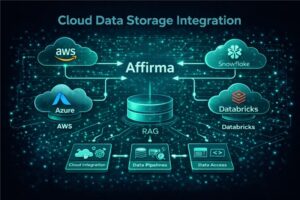
Cloud Data Storage Integration

Provide deep integration with modern cloud data platforms to enable automated metadata harvesting, lineage capture, and semantic model mapping. The initial focus will be tight integration with Databricks lakehouse environments, followed by broader AWS cloud data platform integration, enabling Affirma to operate seamlessly within enterprise data lake architectures.

Key Product Functions
  • Databricks Unity Catalog metadata harvesting
  • Databricks table, schema, and pipeline lineage integration
  • Mapping semantic models to lakehouse tables
  • AWS S3 metadata discovery and classification
  • Automated data source onboarding
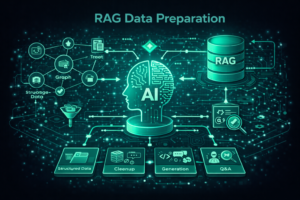
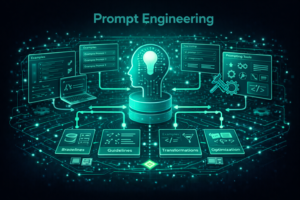
RAG Data Preparation

Prepare enterprise datasets and knowledge sources so they can support Retrieval-Augmented Generation (RAG) architectures used by generative AI applications. Affirma organizes enterprise knowledge through semantic relationships and metadata enrichment so LLMs can retrieve accurate context.

Key Product Functions
  • Dataset semantic indexing
  • Knowledge graph creation
  • Vector embedding generation
  • Document-to-data linking
Prompt-to-Data Mapping

Translate natural language questions into structured queries by leveraging the semantic model, business glossary, and ontology relationships. Business users can ask questions in plain language and the platform maps the question to the correct datasets and fields.

Key Product Functions
  • Natural language to SQL translation
  • Query generation via ontology
  • Contextual dataset identification
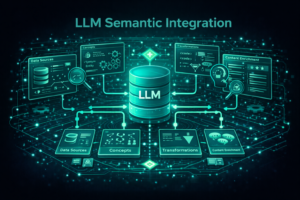
LLM Semantic Integration

Integrate large language models directly with Affirma’s semantic layer and ontology framework so AI systems can interpret enterprise data using business context rather than raw schemas. The semantic model provides structured meaning, relationships, and governance metadata that guide LLM reasoning and reduce hallucinations.

Key Product Functions

  • Semantic context injection for LLM prompts
  • Knowledge graph grounding for AI responses
  • Ontology-driven prompt templates
  • Context retrieval from semantic models
  • LLM guardrails based on governance rules
AI Metadata Enrichment

Use AI/ML techniques to automatically enhance metadata across datasets, schemas, and documentation. The platform analyzes table structures, column names, and usage patterns to infer business meaning, relationships, classifications, and ownership. This reduces the manual effort required to build a usable data catalog and helps rapidly scale governance programs.

Key Product Functions
  • Automatic dataset classification
  • Business glossary mapping suggestions
  • Automated tagging and labeling
  • Sensitive data detection (PII, regulatory data)
  • Schema and entity recognition
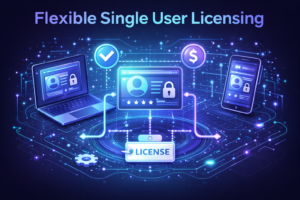
Licensing

Create the opportunity for either single user or enterprise licensing.
  • Allows for testing and getting use to the development of the tool
  • Allows the use to expand the tool to other users using enterprise licensing
  • Allows flexibility and opens the door for more people to use our product
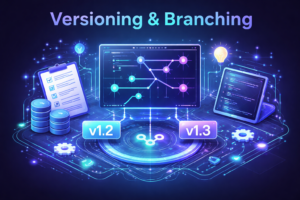
Versioning and Branching

Implement version-controlled modeling with branching and governance workflows.

  • Allow users to make changes to ESMs, data designs, or mappings in their own branches instead of a single shared version.
  • Introduce an approval process where changes are reviewed and validated before acceptance.
  • Merge approved changes into the main branch, combining versioning, branching, and governance into one structured workflow.
Data Design and Quality

Enhance data modeling and quality by leveraging constraints, reference models, and advanced customization capabilities.

  • Use data design constraints to generate and support XSD-type structures and validations.
  • Build enterprise semantic models from reference models, then derive detailed data designs from them.
  • Enable highly specific schema customizations while refining data quality capabilities and controls.
Request A Demo
Name(Required)
Privacy(Required)
Affirma